

PART I: DIAGNOSING THE CRISIS
An aging membership and the collapse of internal operations threaten the survival of one of the world’s oldest philanthropic institutions. The solution requires looking at the successful models of other centuries-old organizations.
By: [NG Pan American No. 47 Yerismel Fernandez Perez]
The facades of the Independent Order of Odd Fellows (IOOF) lodges guard centuries of history, yet today they reflect an undeniable reality: silence and oblivion. Once a vibrant engine of social support and mutual fraternity, the organization now faces an existential crisis marked by a rapidly aging membership and an alarming inability to attract new generations.
How did a global order reach such a state of vulnerability? The answer lies not in modern society’s lack of interest in philanthropy, but in the erosion of the organization’s own foundations.
PART I: DIAGNOSING THE CRISIS
- The breakdown of the machinery: Internal dysfunction
The primary symptom of this decline is internal dysfunction. Many lodges have morphed into rigid bureaucratic structures, mired in fruitless debates over obsolete bylaws and ego-driven disputes rather than focusing on community engagement. A lack of transparency, resistance to change from traditional leadership, and a complete absence of digital administrative processes have stifled the lodges’ ability to function. An institution that fails to communicate effectively internally can hardly project light outwardly.
- The loss of charitable identity
The crisis runs even deeper: the institution has lost sight of its identity as a genuinely charitable order. In practice, many local branches no longer achieve the social impact they once did. A worrying disconnect has set in, wherein the order cannot even uphold its traditional precepts. https://link.amazon/B010ceqg4
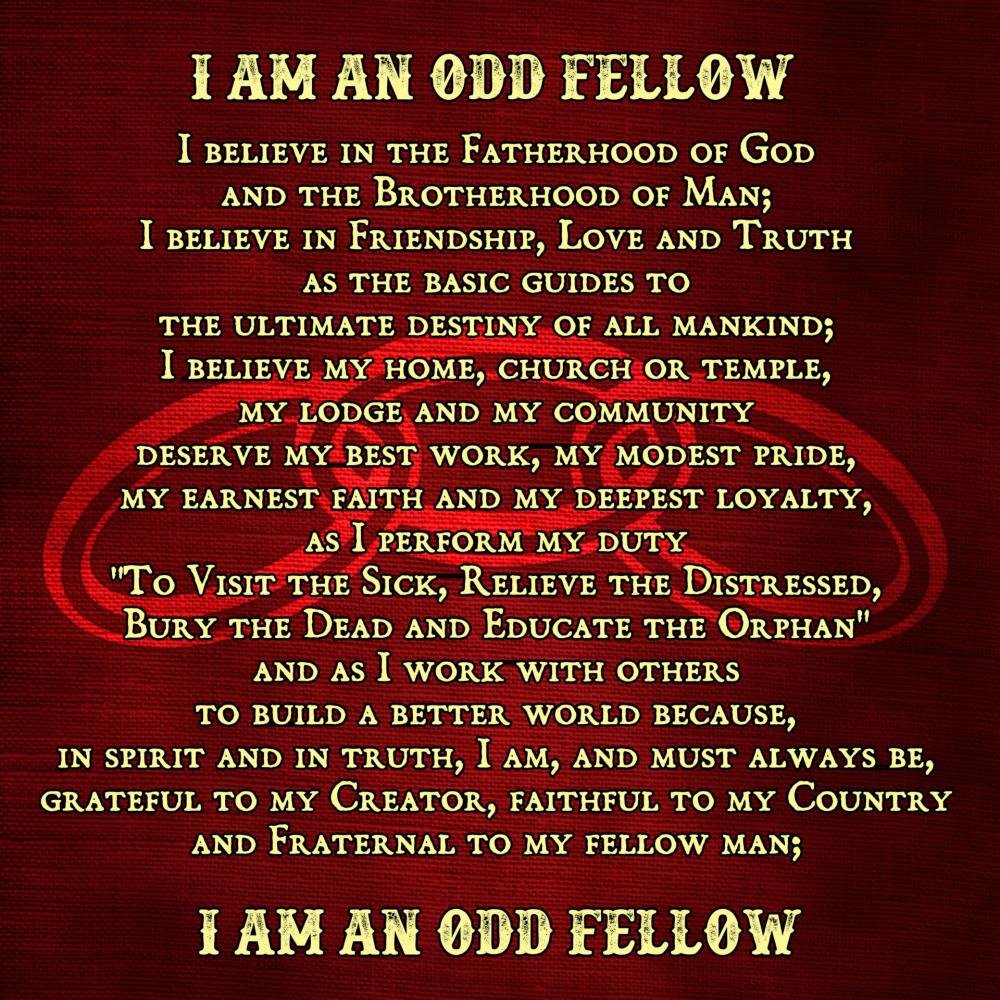
Its historic mandate was always clear: “To visit the sick, comfort the afflicted, bury the dead, and educate the orphans.” Today, these noble objectives seem to have been reduced to slogans painted on walls. If a fraternal order is unable to care for its own members or make a positive impact on its immediate surroundings, it loses its reason for being.
PART II: THE TREATMENT (Models of success to emulate)
The survival of the Oddfellows depends not on replicating the 19th century, but on adapting their timeless values to the 21st century. Other historic institutions have managed to turn around identical crises by transforming their structures:
The Jewish model and the “heirs”: Rebuilding from the roots up
The Jewish community is a global example of resilience and generational continuity. When they detect young people drifting away, they implement aggressive retention strategies:
Investing in identity (The Birthright Effect): They fund trips and cultural exchanges so that members’ children and grandchildren (“heirs”) can rediscover their roots through deeply moving experiences. Oddfellows lodges should fund camps and inter-lodge youth gatherings to restore their pride in belonging.
Employment and mentoring networks (Networking): Young people today do not attend a place of worship solely for the sake of ritual; they seek a community that propels them forward. In the Jewish tradition, senior members actively help the “heirs” enter the job market. The Oddfellows must modernize the concept of “mutual aid” and transform it into an internal incubator for professional development.
Early responsibility: Young people are not made to wait until adulthood to have a voice. From the age of 12 or 13 (mirroring the Bar Mitzvah concept), they take on real, autonomous philanthropic projects.
Transformations in religious institutions and modern orders
Churches and organizations that are growing today have radically changed their internal operations:
From temple bureaucracy to dynamic structures: Modern churches have replaced empty sanctuaries with “cells”—small gatherings in coffee shops or parks—focused on emotional support. The Oddfellows need to make their regular meetings more flexible, cutting back on heavy administrative protocol to prioritize philosophical debate and genuine fellowship.
Professionalizing aid (The Order of Malta model): Young people seek volunteer opportunities that truly change lives using 21st-century methods (digital fundraising, mental health campaigns, soup kitchens). If the lodge channels that energy and becomes a high-impact local NGO, young people will be lining up at the door to join.
The family-oriented approach (The Shriner model): Modern members do not want to shut themselves away for three hours, leaving their families at home. Institutions like the Shriners have integrated spouses and children into public events, barbecues, and recreational activities. This allows the transition of the “heir” toward formal initiation to happen naturally.
Summary of Institutional Reengineering
| Institution | Success Strategy | Urgent Application for the IOOF |
|---|---|---|
| Jewish Community | Employment networks, mentoring, and identity programs for heirs. | Create job banks and internal professional mentoring programs for members’ children. |
| Modern Churches | Elimination of bureaucracy and creation of dynamic cells. | Shorter protocol sessions; more time for community action. |
| Humanitarian Orders | Professionalization of social aid with visible impact. | Modernize the precepts (e.g., linking “educating the orphan” with technology scholarships). |
| Family Models | Full integration of the nuclear family into social life. | Open the doors of the lodge to shared recreational activities. |
Conclusion: Change Internal Operations or Perish
The Oddfellows face the dilemma common to all historic institutions: renew or disappear. Turning a blind eye to aging and internal ineffectiveness will only hasten the closure of more lodges. Youth branches are not merely the future; they are the active present. It is time to throw the doors wide open, streamline bureaucracy, pass the torch to the next generation, and remember that fraternity is not inherited through inertia—it is demonstrated by fulfilling the promises of the past, day by day, using the tools of the future.