

por brotherhoodherald.com
There are wounds in a country’s collective memory that time cannot heal—especially when they are marked by deception and institutional dispossession. In the late 1980s, the Fidel Castro regime—stifled by a profound liquidity crisis and the imminent collapse of the Soviet bloc—carried out one of the most cynical covert confiscation operations in the history of the Americas: the opening of so-called “Gold and Silver Exchange Houses.” It was an episode that, through a blend of popular wit and pain, was quickly rechristened “Hernán Cortés’s shops”—a clear allusion to the Spanish conquistador who traded trinkets for the gold of the indigenous people.
https://www.thebeardstruggle.com/discount/CHANGE-ME-eda6357?ref=y2exnjy
The Psychology of Dispossession: Appraisers Trained to Deceive
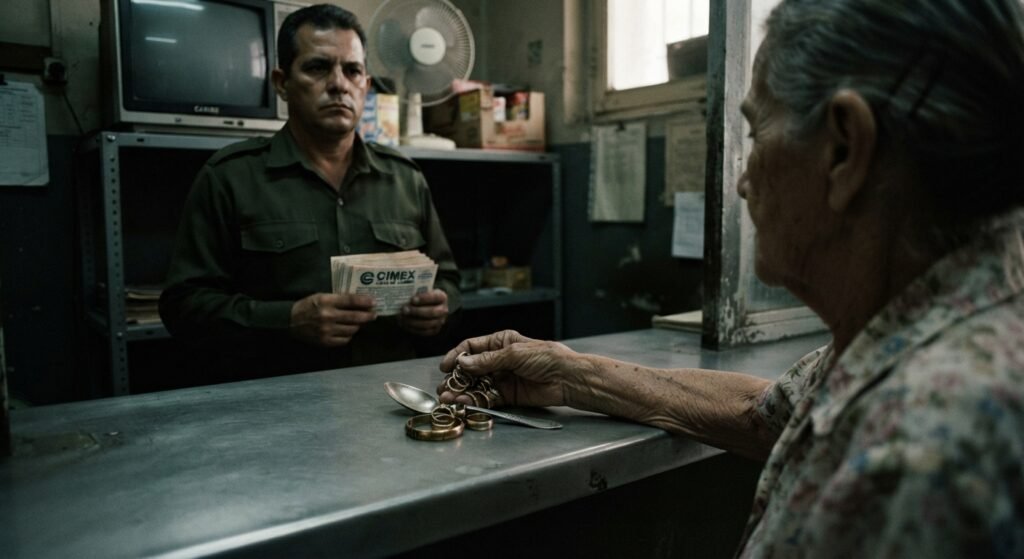
The mechanism was as macabre as it was efficient. Taking advantage of the chronic scarcity that was already suffocating Cuban families, the government opened outlets managed by the state-owned corporation CIMEX. The objective was clear: to strip citizens of any items of real value.
To achieve this, the offices were not staffed by traditional appraisers, but rather by agents of the Ministry of the Interior (MININT) and psychologists specifically trained to exploit people’s desperate needs. No questions were asked, and no proof of ownership was required; the only priority was collecting the metal.
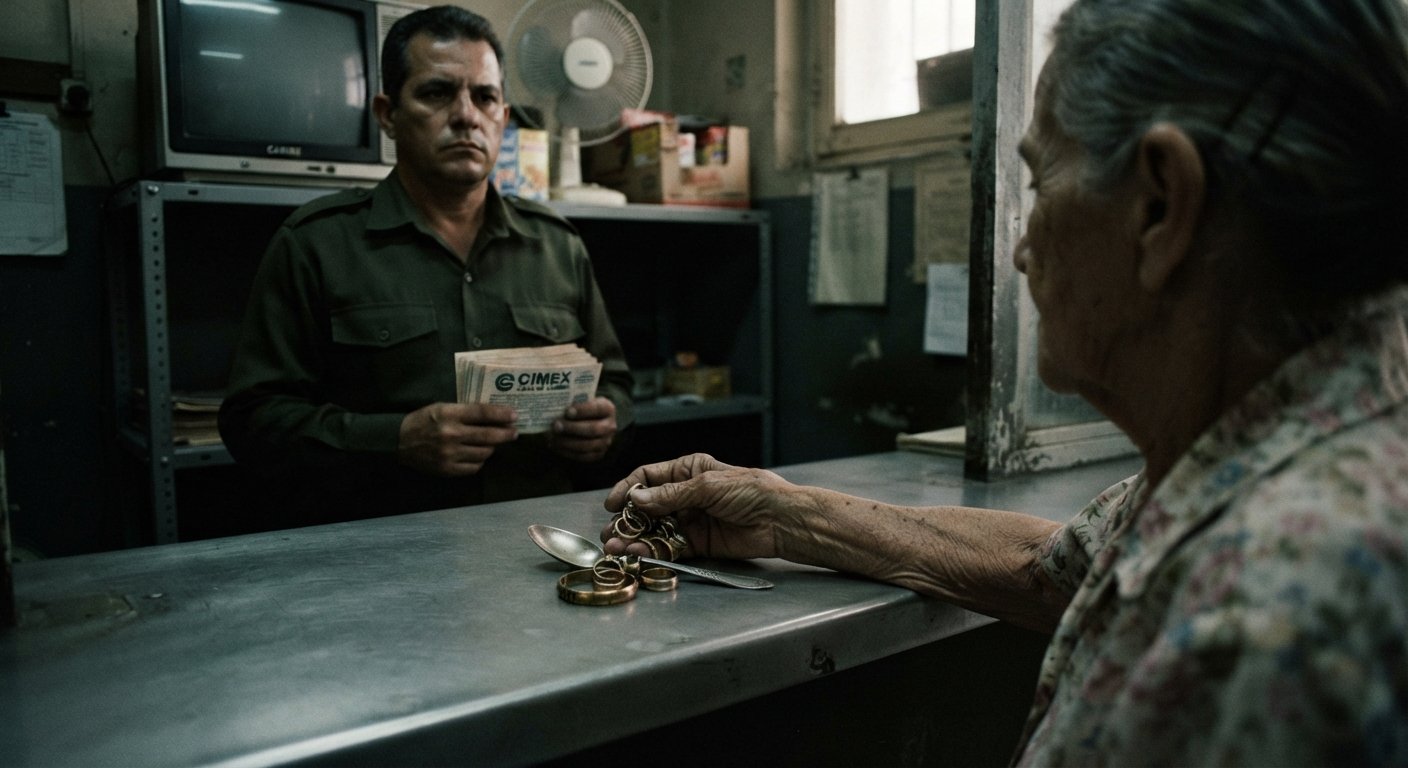
Cornered by hunger and deprivation, families began handing over heirlooms of incalculable worth: wedding rings, chains inherited from grandparents, silverware, antique watches, rare porcelain, and paintings of historical significance. The appraisal process was an absolute fraud: the regime paid based strictly on the weight of the melted-down metal, completely disregarding precious stones—such as diamonds—as well as the craftsmanship or the historical and sentimental value of the pieces.
The Deception of “Chavitos” and Consumer Trinkets
In exchange for the accumulated wealth of generations, citizens received neither dollars nor any form of genuine currency, but rather paper vouchers issued by CIMEX, popularly known as “chavitos.” With these state-printed slips of paper, Cubans could access exclusive stores—off-limits to the general public—to trade them for consumer goods that were in short supply throughout the country: Russian-made televisions and tape recorders, electric fans, refrigerators, footwear, and imported clothing (such as the highly coveted pitusa jeans). For the regime, it was a highly lucrative arrangement: it imposed a levy of up to 40% on the metal’s actual value in the foreign market, while selling household appliances and clothing at inflated prices burdened by heavy taxes. The people surrendered lasting wealth in exchange for obsolete technology that, within a few years, ended up broken or unusable.
Evidence of the plunder: Where did the gold and art belonging to the Cuban people end up?
Although the regime carried out this looting under a veil of absolute secrecy and state censorship, decades of independent investigations, international art tracing, and confessions from former officials within the regime itself have brought to light compelling evidence of this historic theft:
Clandestine smelting and Swiss ingots: The testimony of Doralis Silva—who served as director-general of the state entity responsible for processing these precious metals before breaking with the regime—revealed the path taken by the gold. Silva provided a detailed account of how the jewelry and sentimental heirlooms of thousands of Cubans were sent to secret smelting facilities. There, they were stripped of their original form and transformed into high-purity gold ingots, which were then smuggled to European markets—primarily Switzerland—to fund opaque accounts controlled by the ruling elite.
The “black market” in Atabey and Subasta Habana: The Castro regime never returned items of historical value, nor did it place them in public museums. Fine metalwork, colonial silver tableware, delicate glassware, and antique furniture were stored in confiscated mansions in the exclusive Atabey neighborhood of Havana. Later, the regime institutionalized the sale of this heritage through closed-door official events—such as Subasta Habana—and private catalogs controlled by the military, selling the stolen family treasures directly to foreign diplomats and international collectors. The proceeds never entered the national public budget.
Tracing signatures at international auctions: Valuable paintings by great masters of Cuban visual art—such as Amelia Peláez, René Portocarrero, and Wifredo Lam—which had been part of private and family collections seized under false pretenses, began to “reappear” mysteriously decades later at prestigious global auction houses like Sotheby’s and Christie’s in New York and Paris. International law firms and registries of stolen art continue to track these pieces, which were sold covertly by the Cuban regime to serve as international currency.
The Castros’ secret storehouses: Firsthand accounts from former members of the regime’s innermost security circle—such as the late Lieutenant Colonel Juan Reinaldo Sánchez (a former bodyguard to Fidel Castro and author of the book The Double Life of Fidel Castro)—confirmed the existence of high-security storage facilities inaccessible to the average Cuban. These restricted areas housed safes filled with cash, exclusive art collections, and a permanent stock of accumulated jewelry, revealing that the spoils from these seizures served as a personal reserve fund and a means of survival for the dictatorship.
Decades later, the gold and silver exchange centers remain etched in Cuba’s history as a testament to institutionalized theft—a brazen maneuver in which a government stripped its own citizens of their economic past, present, and future, leaving them empty-handed and turning the cherished possessions of thousands of households into private funds for a dictatorial elite.