

By Brotherhoodherald
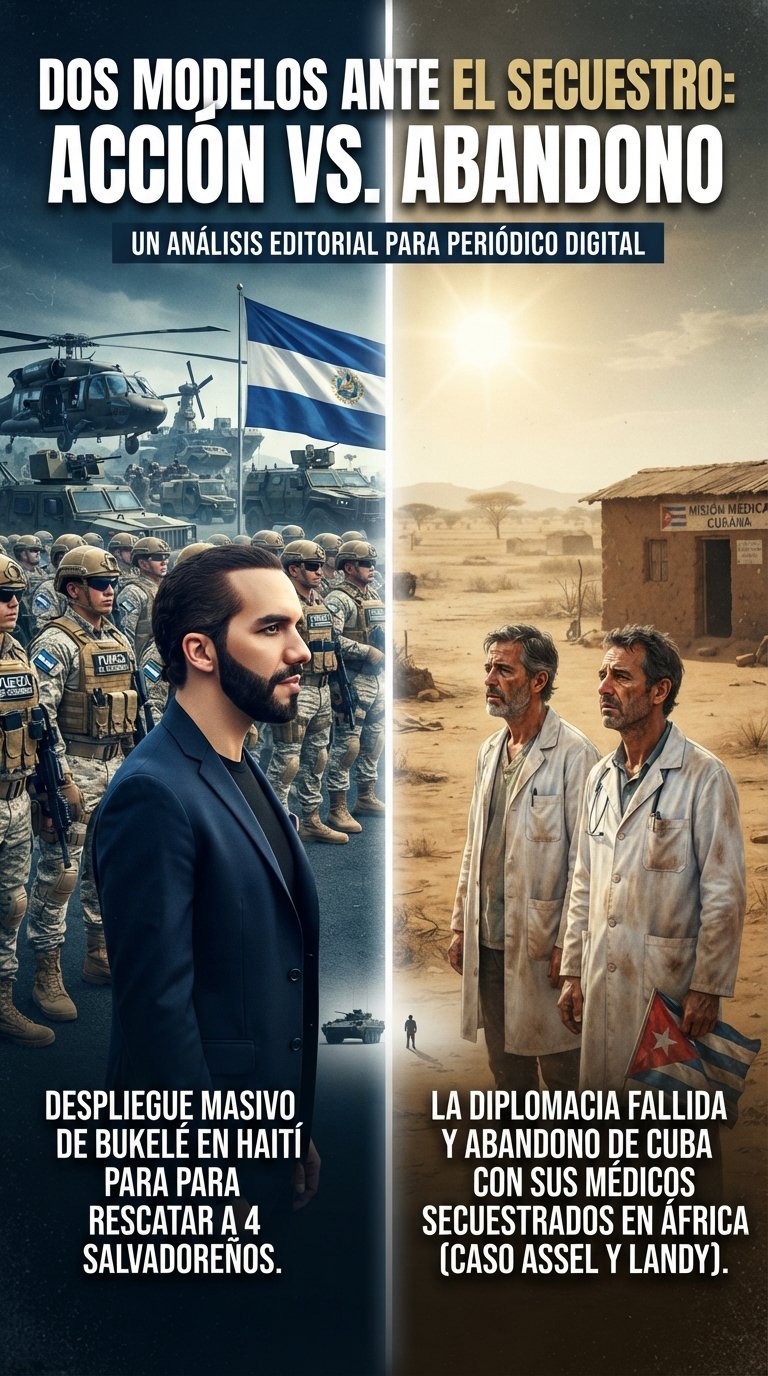
The value a government places on the lives of its citizens is measured by actions, not press releases. While in El Salvador, the administration of Nayib Bukele launched a historic operation—deploying over 2,000 military personnel to Haiti to rescue four Salvadoran aviation technicians who had gone missing at the hands of criminal gangs, and covering 90% of the associated costs—the Cuban dictatorship presents an entirely different reality: one of absolute indifference and the abandonment of its citizens when they find themselves in extreme danger beyond the country’s borders.
Havana’s inaction is not a logistical coincidence; it is a political pattern characteristic of a regime that treats its own nationals as economic commodities and propaganda tools, yet turns its back on them the moment they require genuine protection.
Doctors in Africa: Five Years of Promises and a Tragic End
https://www.thebeardstruggle.com/discount/CHANGE-ME-eda6357?ref=y2exnjy
The most painful contrast to the Salvadoran approach is the case of doctors Assel Herrera and Landy Rodríguez, who were kidnapped in Kenya in April 2019 by the jihadist group Al-Shabaab. While other nations might deploy special forces, the response from Cuba’s Ministry of Foreign Affairs (MINREX) was limited to bureaucratic red tape.
For nearly five years, the official narrative relied on claims of “extensive diplomatic efforts” and appeals for respect for the sovereignty of other nations. Yet, behind this rhetoric, there was no projection of force nor any alternative operational planning. The consequence of this passivity became clear in early 2024, when it was reported that both professionals had died in Somalia—killed by airstrikes in the area where they were being held captive—marking the tragic end of a period defined by state abandonment.
A double standard regarding the diaspora: Economic demands without political rights
The vulnerability of Cuban citizens is not confined to those on official missions in Africa; it extends to the millions of emigrants who make up the diaspora, particularly in high-risk regions such as the migration corridors through Central America and Mexico.
Electoral exclusion: Although the regime relies on the revenue generated by the community abroad, the political system denies them the right to vote in general elections from overseas. Suffrage is contingent upon maintaining permanent residency on the island—a status that most emigrants no longer possess.
Costly consular bureaucracy: Cuban consulates—including those in Mexico—frequently face complaints regarding their sluggishness, the high fees charged for essential procedures (such as passport renewals), and a failure to provide meaningful assistance to migrants who fall victim to extortion or kidnapping by criminal cartels. Punishment for Professionals: Health professionals or technicians who choose to abandon state-run missions abroad face harsh migration-related sanctions, including a multi-year ban on re-entering their own country—a measure reinforced by regulatory restrictions designed to control the movement of people.
Internal Control Priorities vs. External Inability
There is a clear asymmetry in how the Cuban state allocates its resources. The government apparatus directs a massive budget and extensive intelligence operations toward internal surveillance, the persecution of dissent, and the restriction of civil liberties within the island. Yet, this supposed efficiency vanishes the moment an ordinary citizen finds themselves trapped in a conflict zone or threatened by international criminal networks.
A lack of logistical equipment, the erosion of the state’s actual geopolitical influence, and the subordination of individual lives to an ideological narrative expose the limitations of a model that prefers to rely on bureaucratic stalling rather than actively defending its own citizens.
Editorial Conclusion
Comparing El Salvador’s military response in Haiti with Cuba’s diplomatic handling of situations in Africa offers a clear lesson for contemporary political analysis. While the Salvadoran government projects strength abroad to protect its own people, the Cuban dictatorship demonstrates a doctrine of practical detachment: it maintains a system designed to extract remittances and consular fees from its diaspora, yet it remains structurally incapable of providing security or rescue when those same citizens face mortal danger.